Kelowna & the Okanagan Valley
Wildfire Burn Clean-Up & Post-Fire Site Recovery
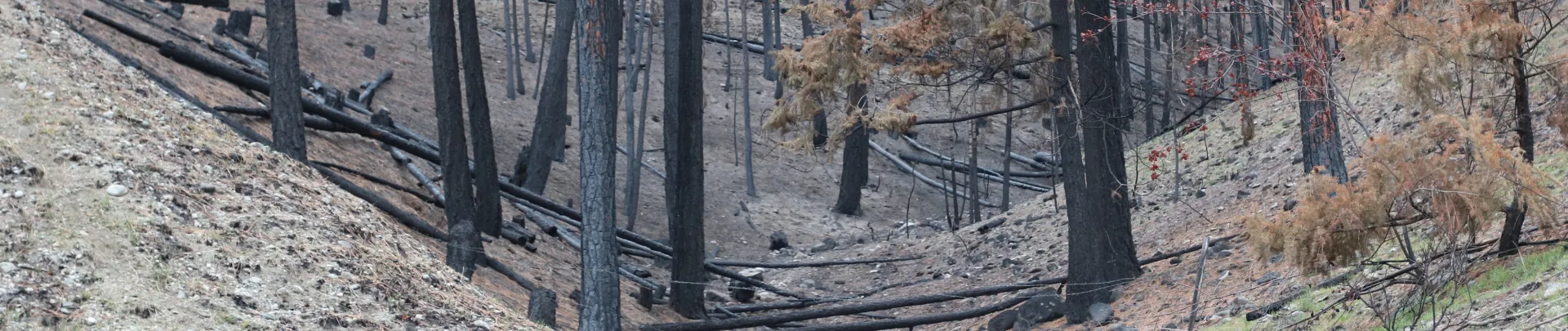
The fire is out and the damage is not finished. On a burned property the second loss usually arrives with the first heavy rain, when there is nothing left holding the soil on the slope. Rock Hard Excavating is an excavation and civil contractor based in Kelowna, and we clear fire-affected land for homeowners, acreage owners, and commercial property owners across the Okanagan Valley: hazard assessment, drainage, debris removal, hazard trees, erosion control, and grading, with the equipment the job takes.
20+
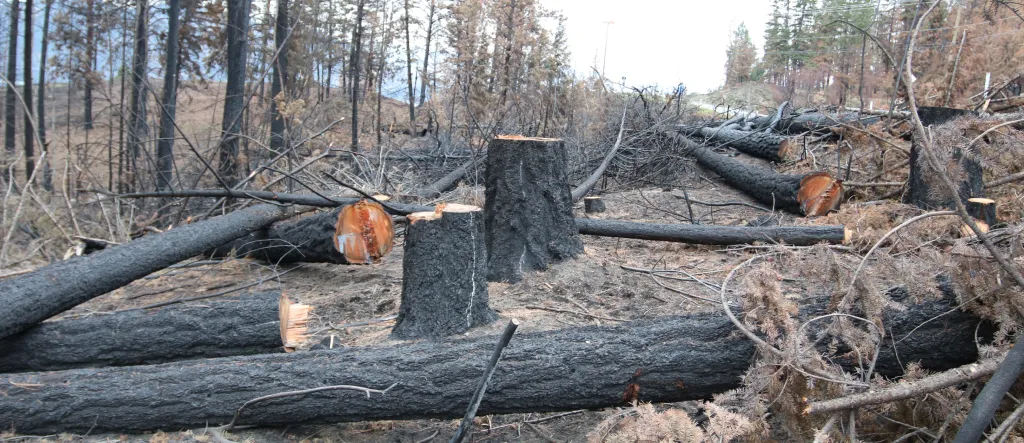
Years Hands-On Experience
13
Okanagan Communities Served
What wildfire burn clean-up involves
Wildfire burn clean-up is the controlled removal of burned material, unstable trees, ash, and fire-damaged structures from an affected property, staged so the site does not become more unstable. On most Okanagan properties it also includes drainage repair and erosion control, because the ground has lost the root structure that was holding it together.
Why water comes before debris
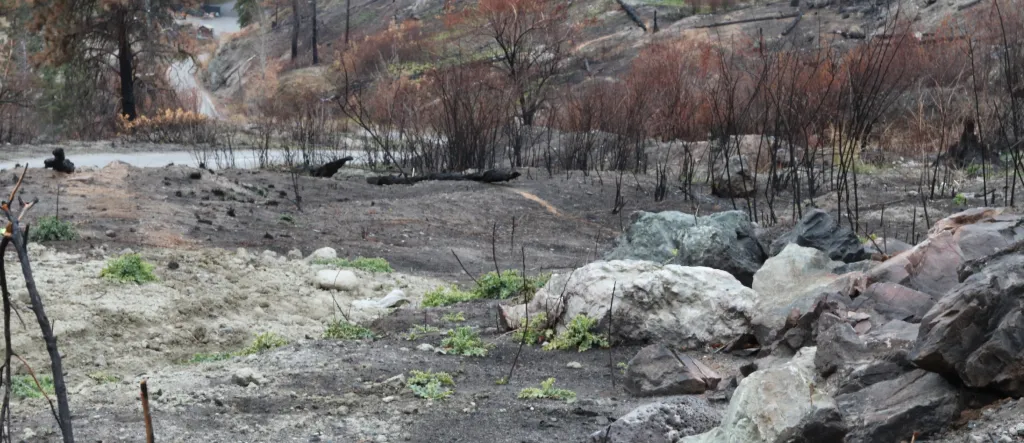
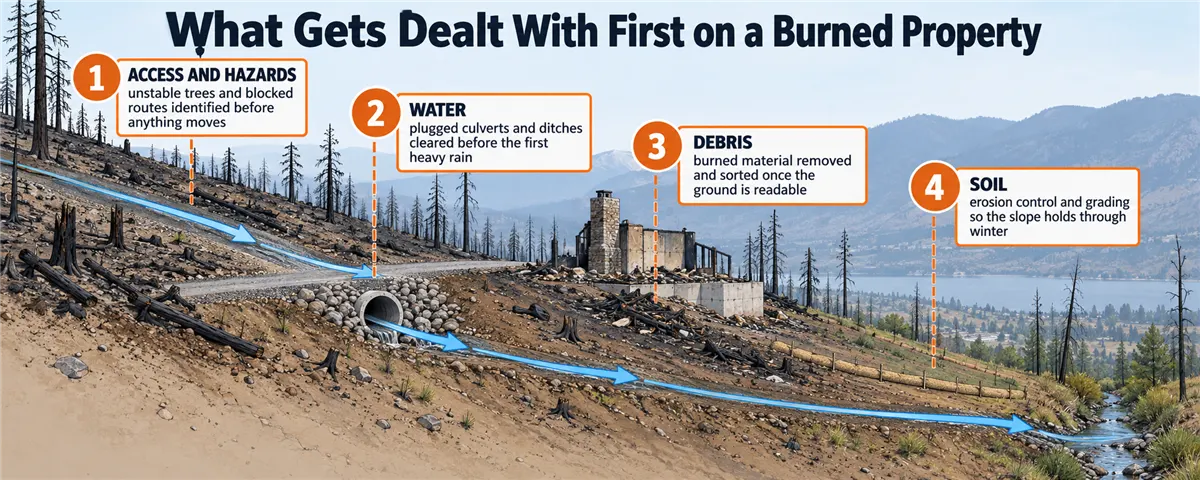
This is the part that gets done backwards most often, and it is why the contractor you pick matters. Fire removes the plants and roots that held the soil together. Water then concentrates in places it never used to, cuts new channels, plugs culverts, and carries ash and sediment downhill into ditches, creeks, and whatever sits below you. On a lot of properties the first heavy rain after a fire does more measurable damage than the fire did.
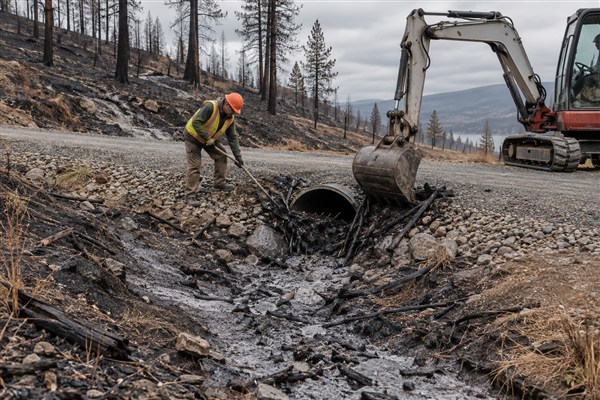
So on a burned site we look at drainage before the debris pile. Where is water coming from, where is it crossing, and where should it go. If a culvert needs clearing or a ditch needs cutting, that happens early, not after the cleanup is finished and the machines have gone home.
Rock Hard Excavating has been doing trenching, storm drainage, and site grading across the Okanagan since 2011, including subdivision-scale storm tank and water main work at the Cara Glen and Glen Park projects. Burn clean-up is that same crew and that same equipment, pointed at a fire-damaged site.
What we will not do
- Put machines on a slope that is not ready to hold them
- Quote a burn cleanup off a photograph. Somebody walks the property first
- Move timber around to look busy when the salvage numbers do not work. We will tell you before you commit
- Work around a scope that needs an engineer, an arborist, or a geotechnical opinion. If it does, we say so
How a burned site gets cleared
Nine stages, in the order they happen on a fire-affected property. The order is not arbitrary. Doing debris before drainage is how a cleanup turns into a washout.
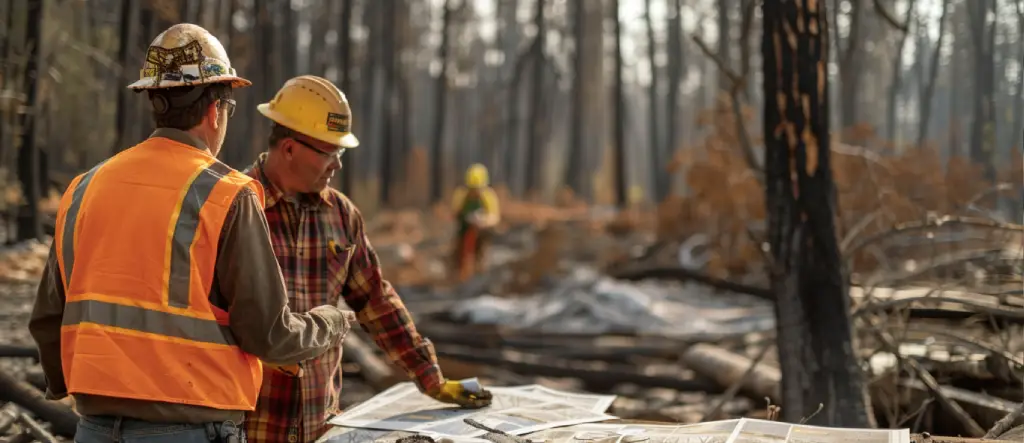
Step 1: Site Walk & Hazard Assessment
- Walk the property with you and identify what is unstable before anything moves
- Record burn severity, slope, soil condition, and where water will run when it rains
- Mark hazard trees, burned-out stump holes, and buried debris inside the work zones
Step 2: Safe Access & Work Zone Setup
- Confirm the route equipment can take without cutting new erosion paths into the slope
- Require utilities, propane, and septic components to be located and made safe before we start
- Stage debris areas, set safety zones, and keep shared roads and neighbouring access clear
Step 3: Drainage Before Debris
- Clear plugged culverts, ditches, and low points while there is still time
- Identify where runoff has changed course now that the ground cover has burned off
- Fix the pinch points that turn an ordinary rainstorm into a washout across your driveway
Step 4: Hazard Tree Removal
- Fell burned trees that are root-burned, cracked, or leaning over access routes and structures
- Work the area in a controlled sequence rather than picking off trees one at a time
- Keep crews and equipment clear of the fall path at every stage
Step 5: Debris Clearing & Sorting
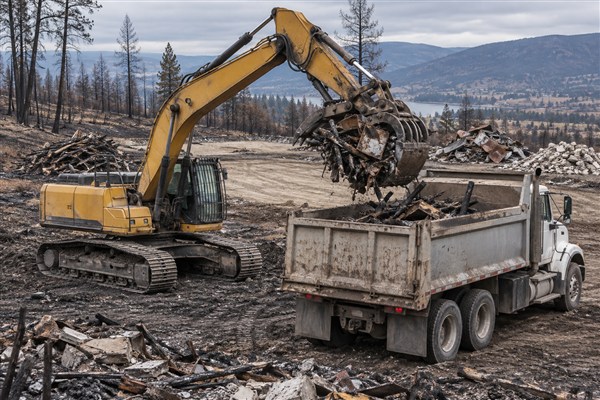
- Remove burned material, ash, sharp debris, and fire-damaged structures from the work area
- Sort as we load, so disposal is efficient and nothing gets handled a second time
- Uncover the real ground surface, which is when drainage and soil condition become readable
Step 6: Timber Salvage Assessment
- Confirm which burned timber is still worth recovering, based on access and wood condition
- Plan haul routes that stay off soft ground and away from drainage paths
- Give you a straight answer when the salvage numbers do not work, before you commit
Step 7: Erosion Control Before the Rain
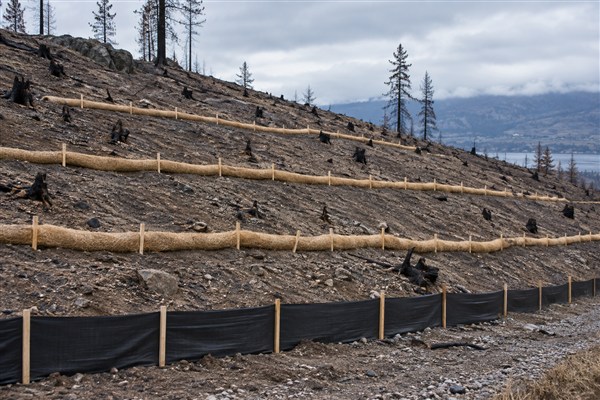
- Protect exposed soil and slopes using the method the ground needs, not a default one
- Install sediment barriers, fibre rolls, mulch, or surface roughening where each one will hold
- Prioritise the slopes and drainage lines that fail first, rather than treating the whole site evenly
Step 8: Grading & Ground Repair
- Reshape ruts, gullies, and burned surfaces so water moves where it is supposed to
- Stabilise soil so the ground holds together and can support new growth
- Re-establish safe access routes for replanting, rebuilding, or whichever trade comes next
Step 9: Haul-Out, Cleanup & Walkthrough
- Remove everything cleared from the property, with nothing piled up and left behind
- Leave driveways, yards, and access routes clean and usable again
- Walk the finished work with you and hand over photographs for your records and your insurer
Property affected by fire? We can walk it with you and tell you what needs doing first.
Contact Us
Where this fits with the rest of the post-fire work
Burn clean-up is rarely the only scope a fire-affected property needs, and on most sites these overlap rather than run one after the other. The right mix depends on slope, soil, access, and how water crosses the land.
A Message from the Founder
Hello, my name is Jody Wurst.
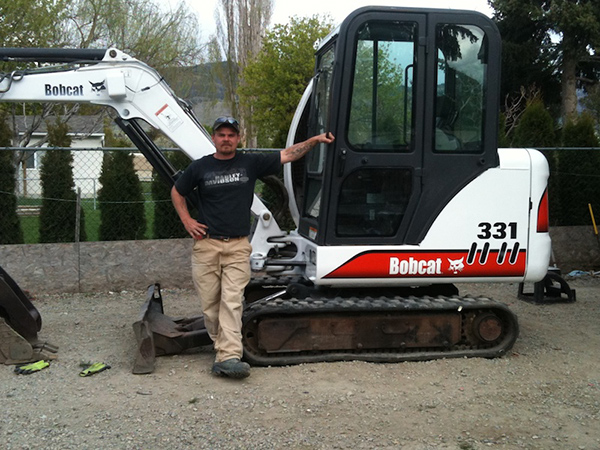
Rock Hard Excavating was established in 2011 with one truck, one bobcat, and one excavator.
I like to say I've been playing in the sandbox since before I could walk, and over the years
I've turned that passion into a craft I take a lot of pride in. With more than 20 years of
hands-on experience, not counting the sandbox years, we've grown into a team of over a dozen
employees with the equipment and expertise to take on virtually any job that comes our way.
Fire changes what a property needs, and it changes it fast. The ground moves differently, the
water goes somewhere new, and things that looked solid last month are not solid any more.
What does not change is the work itself. Clearing a burned site is excavation, drainage, and
grading, done carefully and in the right order, and that is what this company has been doing
across the Okanagan since 2011.
Our goal at Rock Hard Excavating is simple. We want to be your one-stop shop for all your
excavating needs. Life is busy, and dealing with multiple contractors can be stressful.
We believe it should be easier than that. When you work with us, you get a team you can trust
to do the job right the first time, with clear communication, organized job sites, and a strong
focus on safety, quality, and timelines.
Over the past 15 years working throughout the Okanagan, we've also built a strong network of
skilled trades and trusted partners to support projects of all sizes. That means your project
can be a smooth, hassle-free experience from start to finish. We're proud of the work we do,
and references for any type of project are always available upon request.
We service the entire Okanagan Valley, from Vernon to Peachland and everything in between.
If your property has been through fire, call us and we will come and walk it with you.
Warm regards,
Jody Wurst
Founder, Rock Hard Excavating
What clients have said
Brad Davies
I can't recommend Rockhard Excavating enough! They recently completed several major projects on my acreage, including building out a new driveway, digging utility trenches, and performing extensive forest maintenance for fire mitigation.
Harvey Mann, EIT – CTQ Consultants
Working with Rock Hard was an exceptional experience. Their professionalism, attention to detail, and commitment to delivering high-quality results were truly commendable. Throughout the project, they maintained excellent communication, ensuring that every aspect of the job was executed flawlessly. I highly recommend Rock Hard for anyone seeking reliable, skilled, and dedicated professionals for their contracting needs.
Tracey Gosling
I could not be happier to provide a glowing review for the rock wall I recently had compelted by Rockhard Excavating! Jody and Christina came to my property to review my vision for the final result and quickly provided an itemized quote and an estimate date of completion. The job was performed on time, on budget, and with absolute perfection. Their technician, Cody, was an absolute gem. Kind, courteous, and a keen eye for detail. I love my new rockwall. I was literally brought to tears when I saw the end result. I cannot thank you guys enough. With gratitude, Tacey.
Common questions after a fire
Is it safe to be on my property yet?
Not always, and it is the first thing we check. Burned trees can fail without warning in wind, ash hides holes and sharp debris, and ground under a burn is often softer than it looks. If the area is still under an evacuation order or alert, nobody goes on it until the authority having jurisdiction releases it. Once it is released, a person walks the property before any equipment does.
How soon after a fire should clean-up start?
Sooner than most people expect, and the reason is weather rather than tidiness. Drainage and erosion work has a window that closes with the first heavy rain. Debris removal can usually wait a few weeks. Clearing a plugged culvert above your driveway usually cannot.
Will insurance cover wildfire debris removal?
We have billed an insurer directly before, so the paperwork is familiar ground. Filing and negotiating the claim itself stays between you and your insurance company. What we give you is a written, itemised scope with photographs taken before and after the work, which is what an adjuster asks to see.
What happens to the material you haul away?
It goes to the appropriate disposal or processing facility for what it is. Burned structural material, vegetation, and salvageable timber do not all go to the same place. We sort as we load so material is handled once rather than moved twice.
Can any of the burned trees be salvaged?
Some, depending on burn severity, species, stem condition, and whether a truck can reach them. We assess it during the site walk. Where salvage makes sense it can offset part of the cleanup cost. Where it does not, we say so rather than moving wood around for nothing. See timber salvage for the full scope.
What does wildfire burn clean-up cost?
It depends on acreage, access, slope, how much material is coming off the site, and how far it has to travel. There is no honest per-square-foot number for burn clean-up. The site visit and estimate are free, and the estimate is itemised so you can see what each part of the scope costs and decide what to do now and what can wait.
Questions about scope, timelines, or what your insurer will want to see? We can help.
Contact Us
Need a site visit or an itemised estimate? Let's connect.
Contact Us