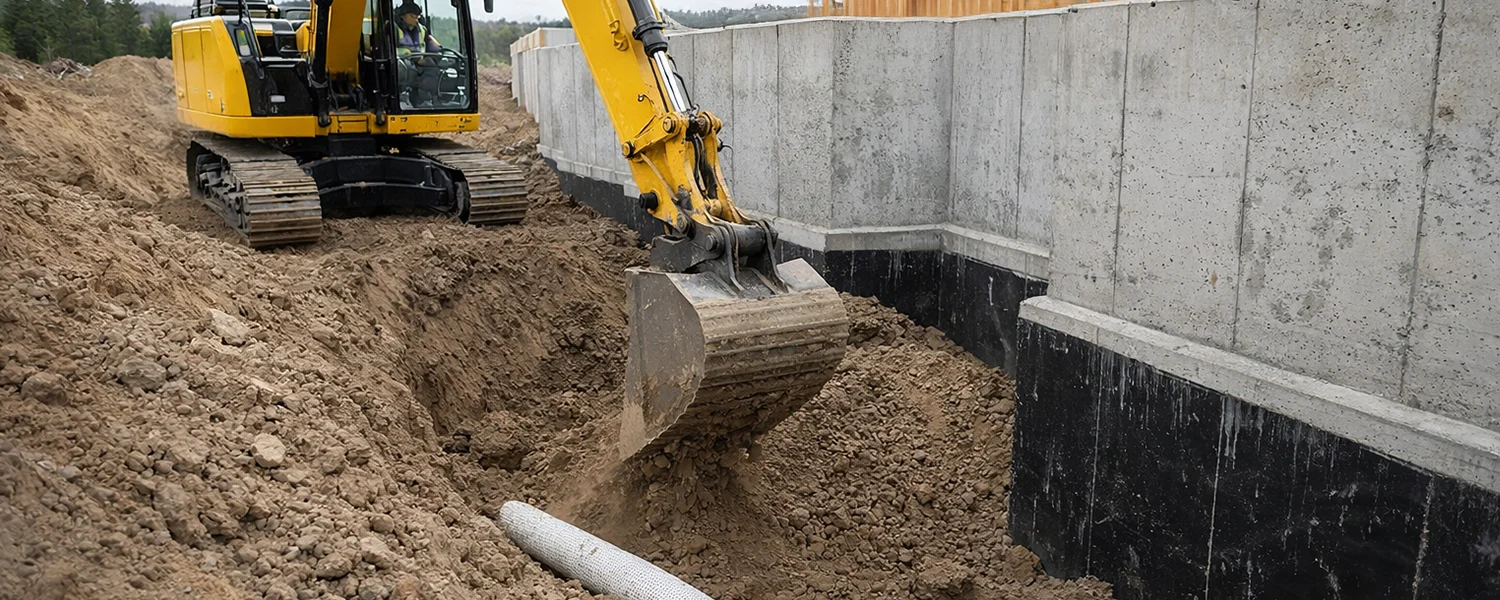
Foundation Excavation
We've been excavating foundations across Kelowna and the Okanagan since 2011 — 15 years of working through the valley's varied ground conditions. Clay-heavy soils in the lower valley, rocky benchland in the east and west, and everything in between. That experience matters when you're 15 feet down and the ground doesn't match what was expected.
We handle the full pre-concrete scope: site clearing and topsoil stripping, bulk excavation to engineer-specified depth, utility trench excavation for water, sewer, gas, and electrical, and final subgrade prep so your concrete crew walks onto a clean, ready site.
Every job is planned with you before machines arrive — timeline, material staging, site access, utility coordination — so nothing is a surprise once work starts.
Foundation Experience
Service Area
No Obligation
Clearing to Backfill-Ready
What Foundation Excavation Includes
A foundation excavation job covers everything from initial site clearing through to a finished, inspection-ready subgrade. Here's what that scope typically includes:
- Site clearing and vegetation removal — stripping existing growth, roots, and any material that would contaminate the fill or interfere with excavation.
- Topsoil stripping and stockpiling — topsoil is stripped and set aside for reuse in final landscaping rather than buried under the foundation or hauled off unnecessarily.
- Bulk excavation to design depth — we excavate to the depth specified by your engineer or architect, maintaining the footprint dimensions exactly.
- Foundation shaping and subgrade preparation — the bottom and sides are shaped to spec and the subgrade is prepared to carry the concrete load uniformly.
- Utility trench excavation — service corridors for water, sewer, gas, and electrical are cut as part of the same mobilization where possible.
- Excess material hauling — spoil that can't be reused on site is removed cleanly, leaving your site ready for the next trade.
Planning Your Project
Before a machine arrives on site, we walk through the full scope with you. The jobs that run smoothly are the ones with no surprises — and the only way to eliminate surprises is to talk through them first.
Here's what that planning conversation covers:
- Timeline from clearing to handoff — accounting for job complexity, utility sequencing, inspection hold points, and coordination with your concrete crew.
- Concrete crew coordination — we time our handoff so they arrive to a site that's ready, not one still being shaped or awaiting inspection.
- Material staging — where stripped topsoil goes, where spoil is staged, and what gets hauled if site space is limited.
- Site access and neighbouring properties — which areas will be affected by equipment movement and how we'll manage them.
- Permits and utility identification — BC 1 Call locate, city building permits, and any pre-inspection requirements confirmed before work begins.
How Long Does Foundation Excavation Take?
It depends on the footprint size, ground conditions, the number of utility trenches required, and how much material needs to be hauled. Here's a general guide:
Small garage or crawlspace
Standard new home
Large or complex site
Accurate to your site
Rocky ground adds time. Difficult access adds time. Sites with significant topsoil stripping or large spoil hauls add time. These aren't variables we can estimate without seeing the site — which is why we offer free, no-obligation estimates before anything is committed to.
For an accurate timeline specific to your project, contact us for a free quote.
The Foundation Excavation Process — Step by Step
Clear the site and strip topsoil.
We start by removing vegetation, stumps, and existing material from the build footprint and equipment access corridors. Topsoil is stripped separately and stockpiled on site — it goes back into the landscaping once the build is complete, rather than being buried under the foundation or hauled off unnecessarily. What stays on site and what goes is agreed during planning.
Excavate to engineer-specified depth.
With the site cleared, bulk excavation begins — removing material to the depth and footprint dimensions specified by your engineer or architect. This is precision work: the concrete crew's forms depend on us being accurate. As material is removed, it's either staged on site in agreed areas or loaded directly for haul. We monitor depth continuously and confirm critical dimensions before calling the subgrade done.
Shape the subgrade and prepare for concrete.
Bulk excavation gets you to the right approximate depth. Subgrade shaping gets you to the right exact depth. The bottom is levelled, shaped, and compacted where required to ensure uniform bearing across the full footprint. Any soft spots, voids, or unsuitable material are identified here and addressed before concrete is ordered. A city inspector may be required to pass the excavation before pour — we know when that's required and account for it in the schedule from the beginning.
Cut utility trenches for water, sewer, gas, and electrical.
With the foundation excavation complete, utility trenches are cut as part of the same mobilization where possible. We excavate service corridors to the depths and locations specified on your service drawings. Running these trenches while equipment is already on site — before backfill begins — saves a return mobilization and keeps service corridors properly integrated with the foundation scope. We'll need your utility layout or service drawings confirmed before this step begins.
Haul excess material and hand off a clean site.
Excavated material that can't be reused on site is loaded and hauled. What goes and what stays is agreed during planning — you won't be left with an unexpected spoil pile to deal with. Once the site is cleaned up and the subgrade has passed inspection, it's handed to your concrete crew. If backfilling is part of the project scope, we coordinate our return visit with your build schedule — so it's not a separate logistics problem for you to manage.
Preparing Your Site
Heavy equipment needs clear access and room to work. A few things done before we arrive protects your property, keeps the job on schedule, and prevents avoidable delays.
- Clear the build footprint and access corridors. Remove vehicles, equipment, fencing, stored materials, and anything else from areas where excavation and machine movement are required.
- Mark all buried utilities. Call BC 1 Call (1-800-474-6886) or use ClickBeforeYouDig.com to have all services located and flagged before work begins. This is a legal requirement in BC — not optional.
- Confirm your building permit is in place. Foundation excavation is typically covered by the project's building permit. Check with the City of Kelowna or your local municipality — some areas also require a pre-excavation inspection or separate excavation permit.
- Know your property lines. If boundaries are uncertain, have them surveyed before we start. Encroaching on neighbouring lots with equipment or stockpiled material is a problem we'd rather plan around than react to.
Foundation Excavation — Common Questions
How deep do you excavate for a residential foundation?
Depth is determined by your engineer or architect based on frost depth, soil bearing capacity, and the design of the structure. In Kelowna and the BC Interior, foundations typically need to extend below the local frost line — generally in the 4 to 6 foot range, though this varies by location and design. We excavate to the spec we're given, not to a depth we assume is standard.
What happens if you hit rock during excavation?
Rock is a real possibility in parts of Kelowna and the Okanagan, particularly on the benchlands east and west of the valley. After 15 years working in these areas, we have a reasonable read on what's likely underground before we start. If rock is a realistic possibility on your site, we discuss options upfront — including whether specialized breaking equipment will be needed. If we encounter unexpected rock mid-excavation, we stop, discuss it with you, and agree on how to proceed — rather than continuing and presenting you with a surprise invoice.
Do you coordinate directly with the concrete crew?
Yes. The handoff between excavation and concrete is one of the most important sequencing points in any build. We time our completion to align with when your concrete crew needs to start, and we communicate directly if anything on our end changes that could affect their schedule. If a city inspection is required before pour, we account for that hold point in the timeline from day one — it doesn't catch us off guard.
Do I need a permit before foundation excavation starts?
Foundation excavation is typically covered under the project's building permit — you'll need that permit in place before we start. Some municipalities also require a separate excavation permit or pre-dig inspection. Check with the City of Kelowna or your local building department before booking. We can share what we've seen required for similar projects in the area, but permit confirmation is the homeowner or GC's responsibility.
What's the difference between foundation excavation and backfilling?
Foundation excavation happens before the concrete is poured — we remove material to create the space for the foundation structure. Backfilling happens after the foundation is formed and cured — we fill the gap between the foundation walls and the surrounding earth, with a proper drainage system installed in the process. We handle both. If your project includes backfilling, we coordinate the return visit with your build schedule so it's not a separate logistics problem for you to manage.
Do you handle utility trenching as part of the same job?
Yes — and it's typically more efficient to handle it that way. Running utility trenches for water, sewer, gas, and electrical while our equipment is already mobilized on site saves a separate return trip and keeps the service corridors properly integrated with the foundation excavation. We'll need your utility layout or service drawings confirmed before we start to verify depths and routing.